Chimp New
Describe what you want in a sentence. Chimp’s AI product manager, designer, engineer and QA tester write the spec, design it, build it and test every release, and nothing moves on until you approve it. No developer, no agency, no waiting list.

Chimp
A product manager to write the spec, a designer, an engineer and a QA tester, each doing their part of the job and showing you the result.
Spec, design, build, testing and release each wait for your yes. Nothing is published until every check is green.
Your domain, your content, and the code in a repository: ours by default, or your own GitHub or GitLab. Take it with you whenever you like.
Six steps
Each step has an AI doing the work of one role on a software team, and a gate that waits for you.
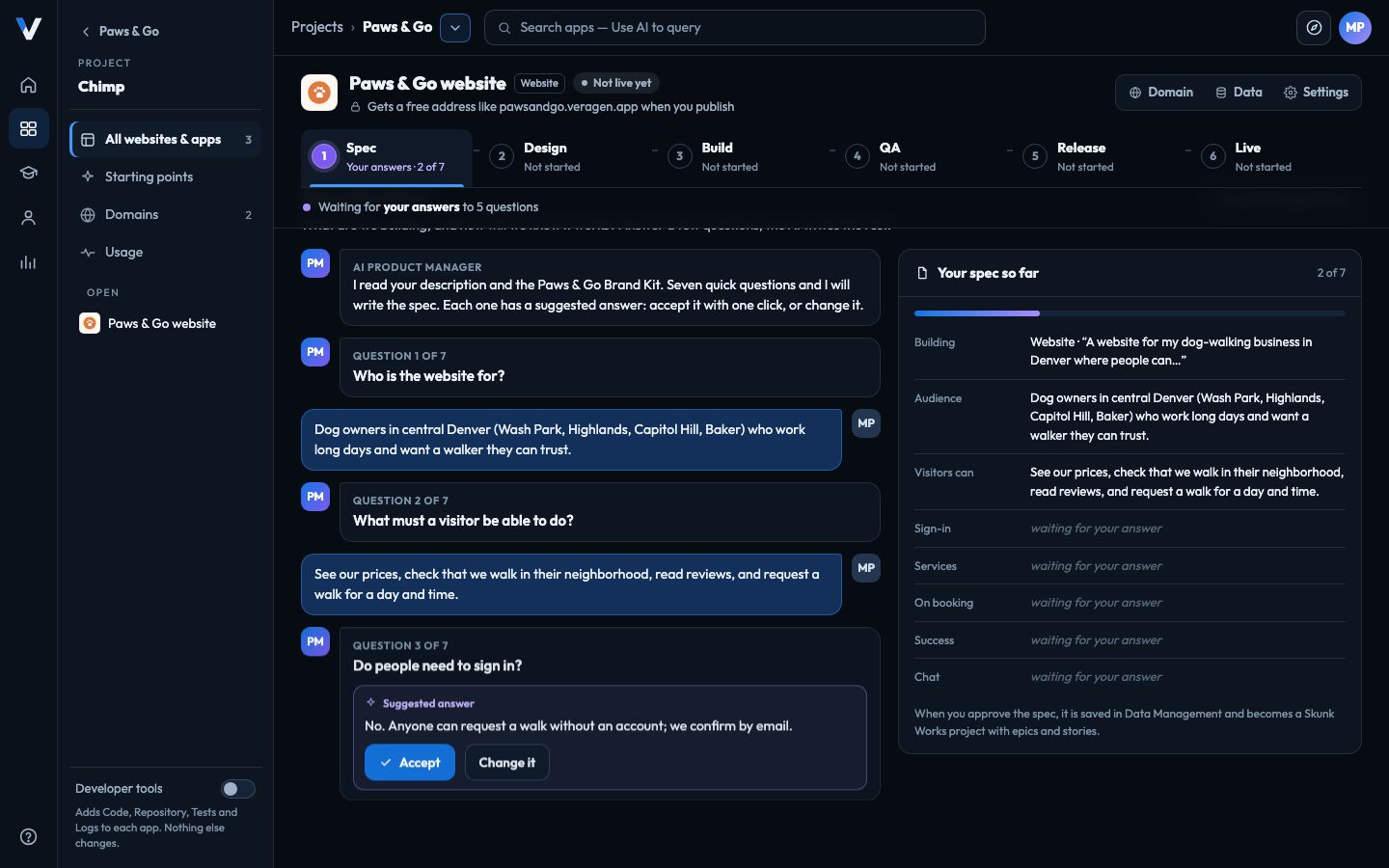
Step 1 · AI product manager
Describe it in a sentence. The AI product manager asks five to seven quick questions, each with a suggested answer, then writes the spec: every page, what visitors can do, and how you’ll know it works.

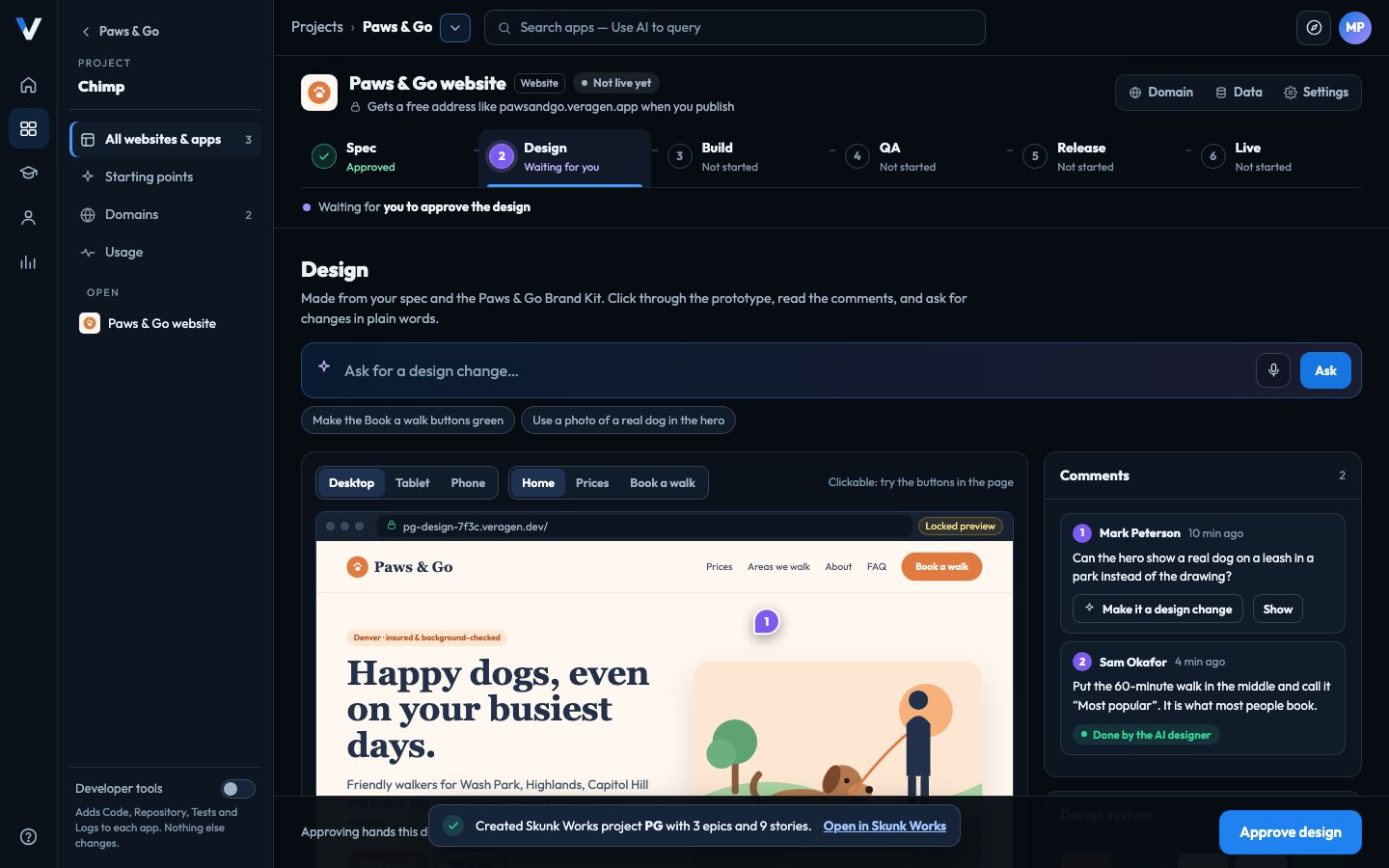
Step 2 · AI designer
A sitemap, a design system made from your Brand Kit, and a clickable prototype. Your team comments right on the page, and any comment can become a design change.

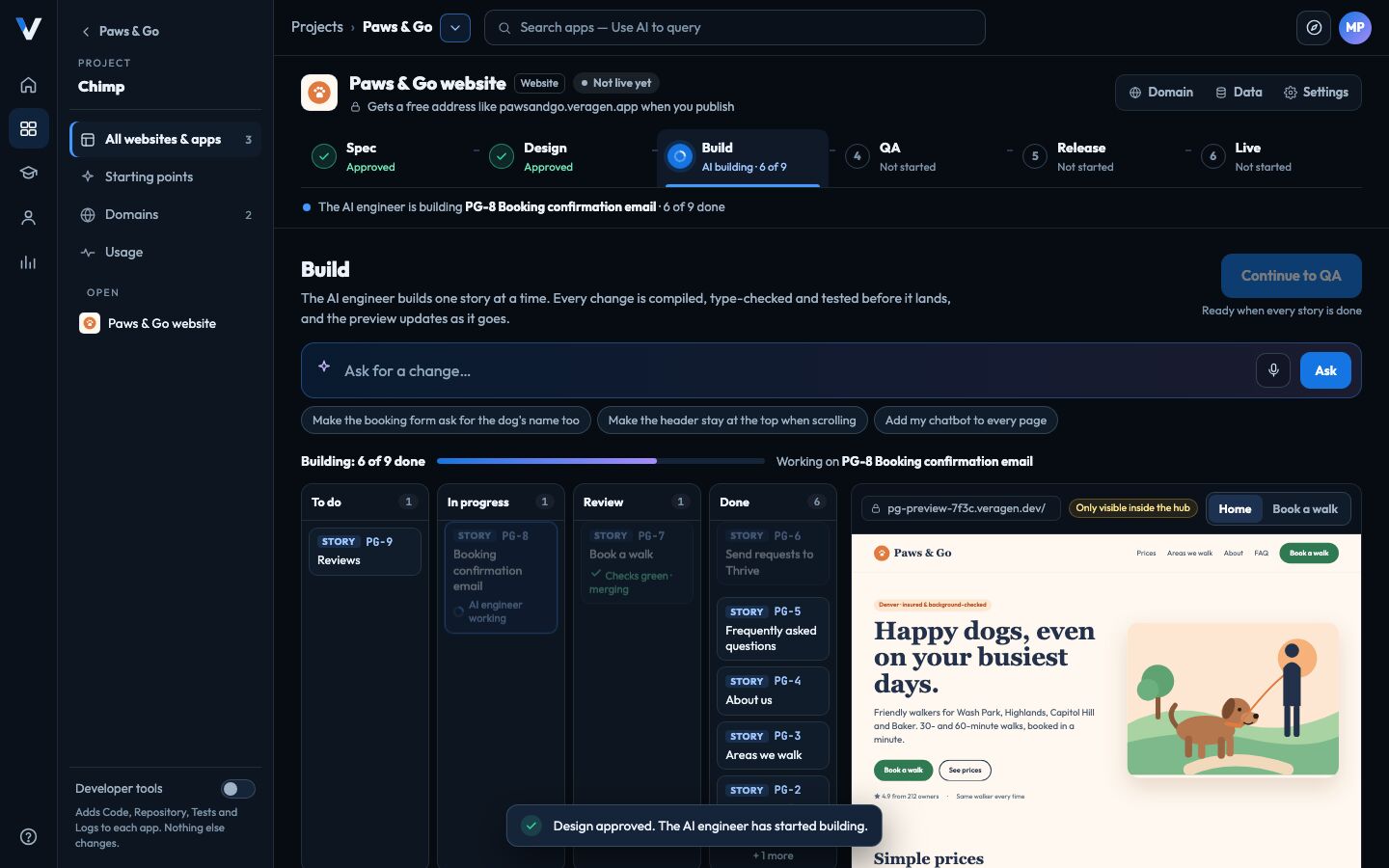
Step 3 · AI engineer
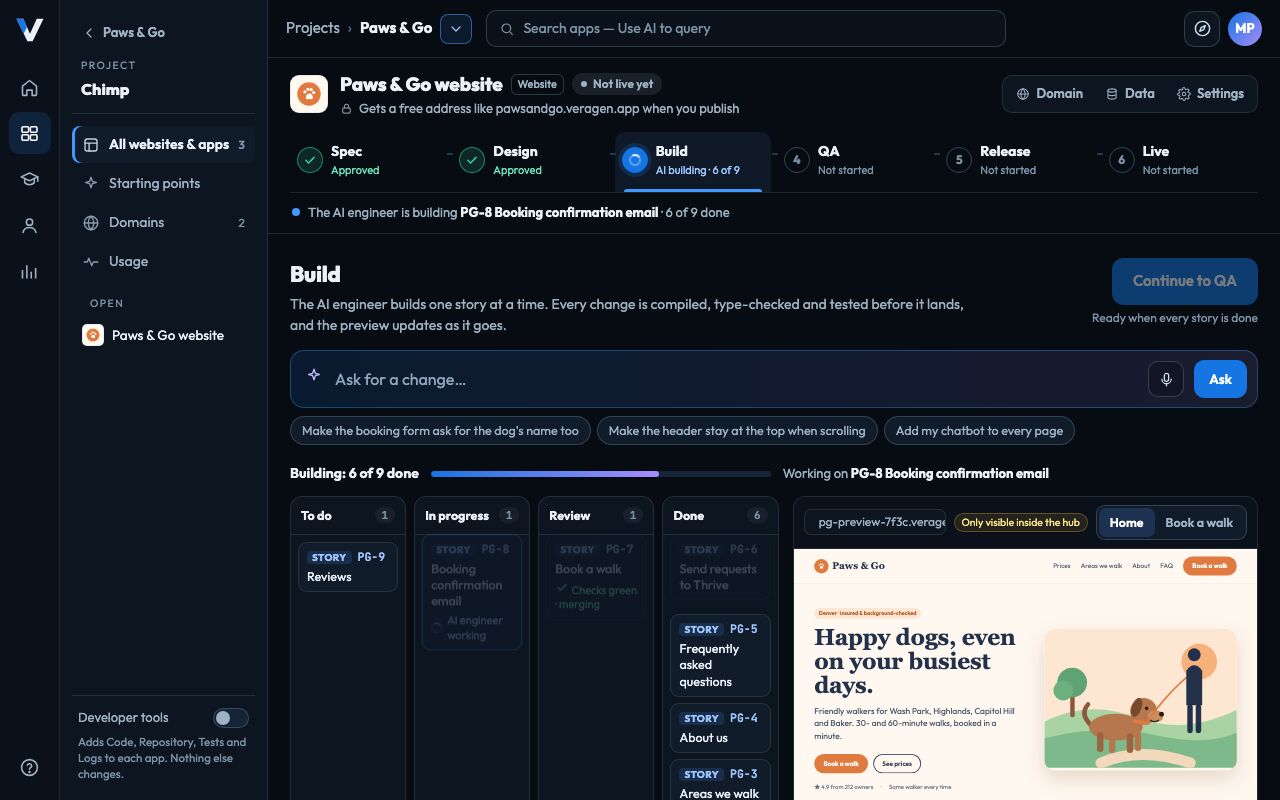
The AI engineer builds it one story at a time. Every change is checked before it lands, and a private preview updates as the work moves across your board.

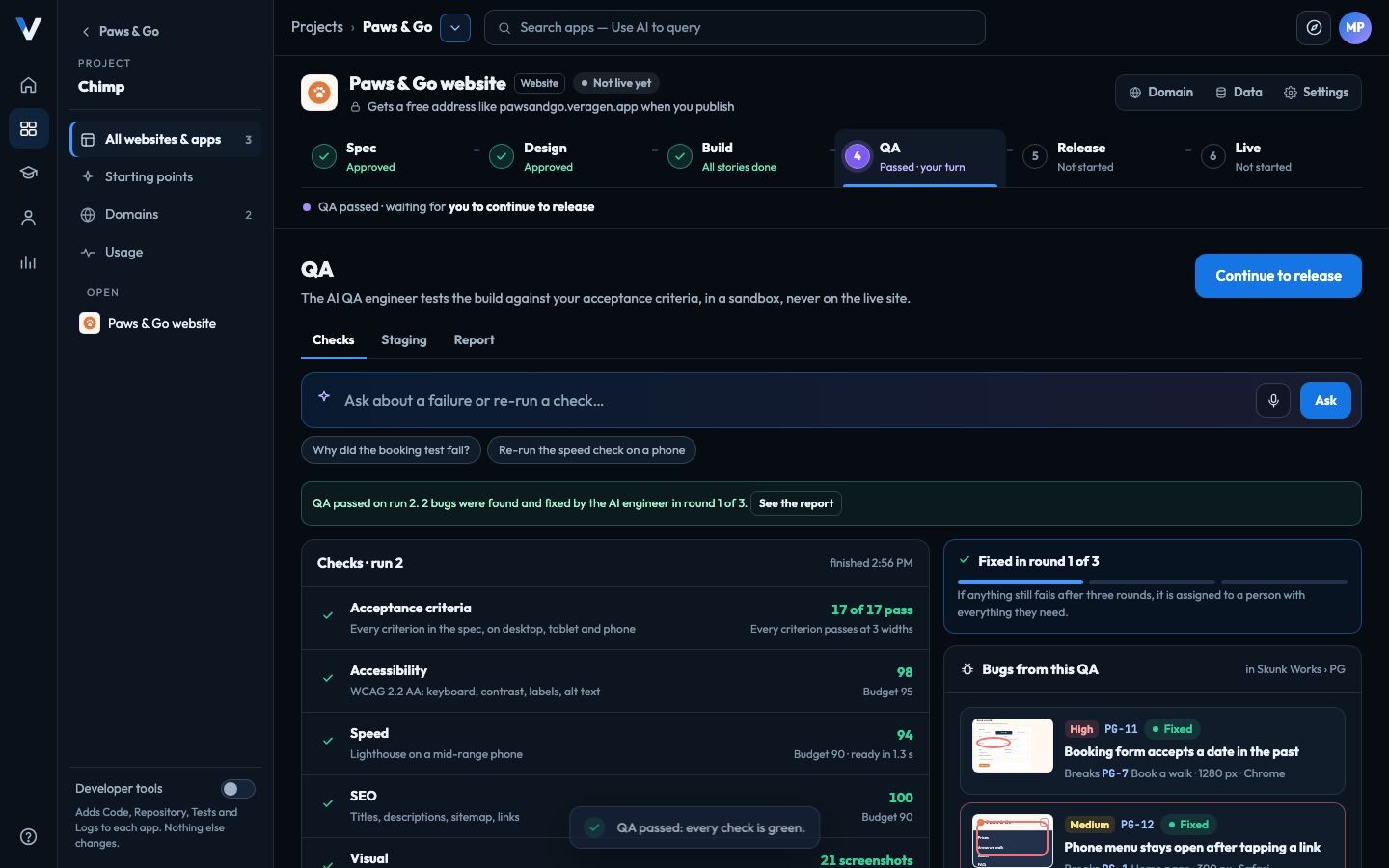
Step 4 · AI QA tester
Every acceptance criterion in the spec becomes an automated test, run on desktop, tablet and phone, along with accessibility, speed, search and security checks. Anything that fails becomes a bug, and the AI engineer fixes it.

Step 5 · You, with a checklist
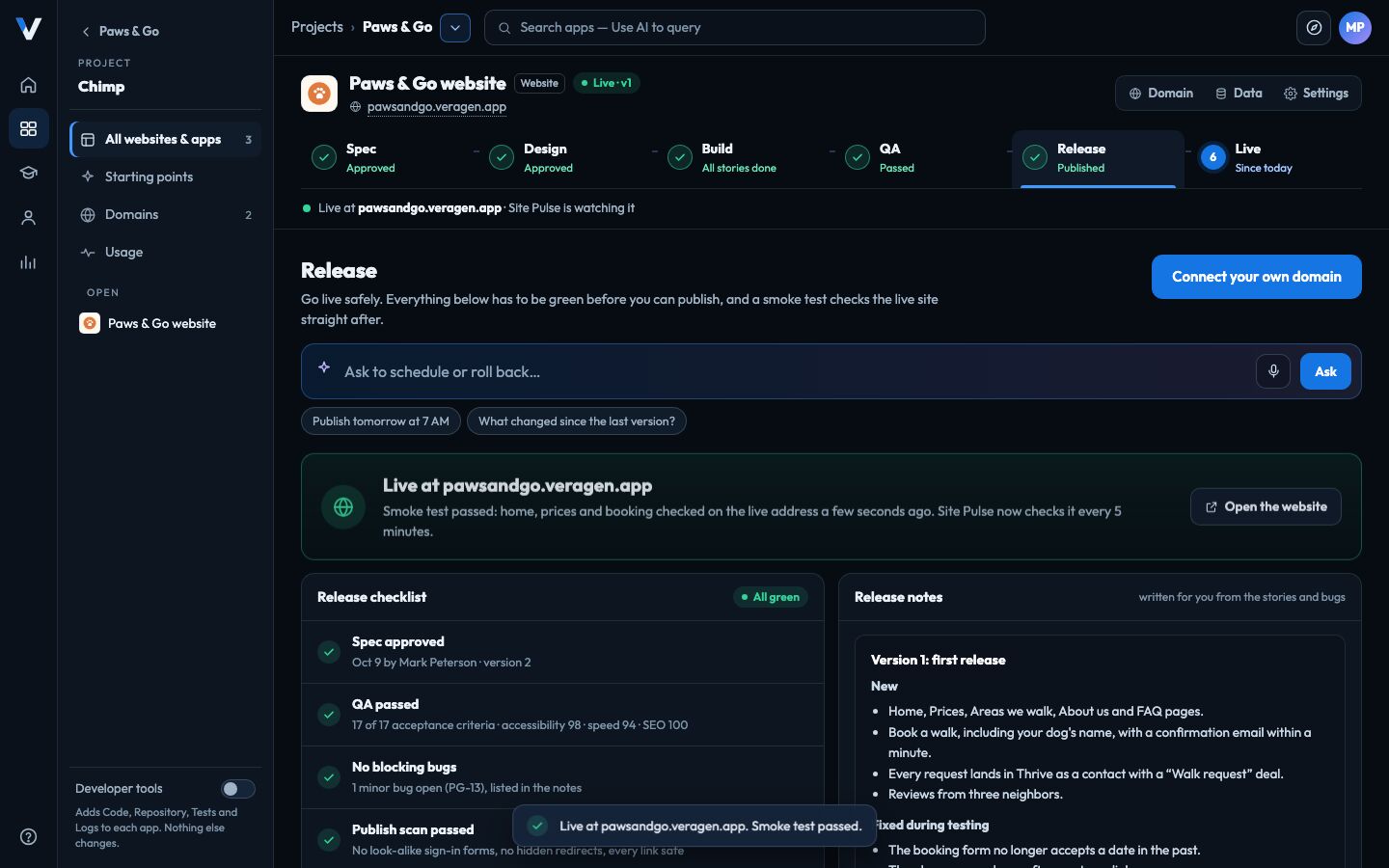
Nothing goes live until the checklist is green. Release notes are written for you, a test checks the live site the moment it’s published, and every version stays one click from a rollback.

Step 6 · Site Pulse
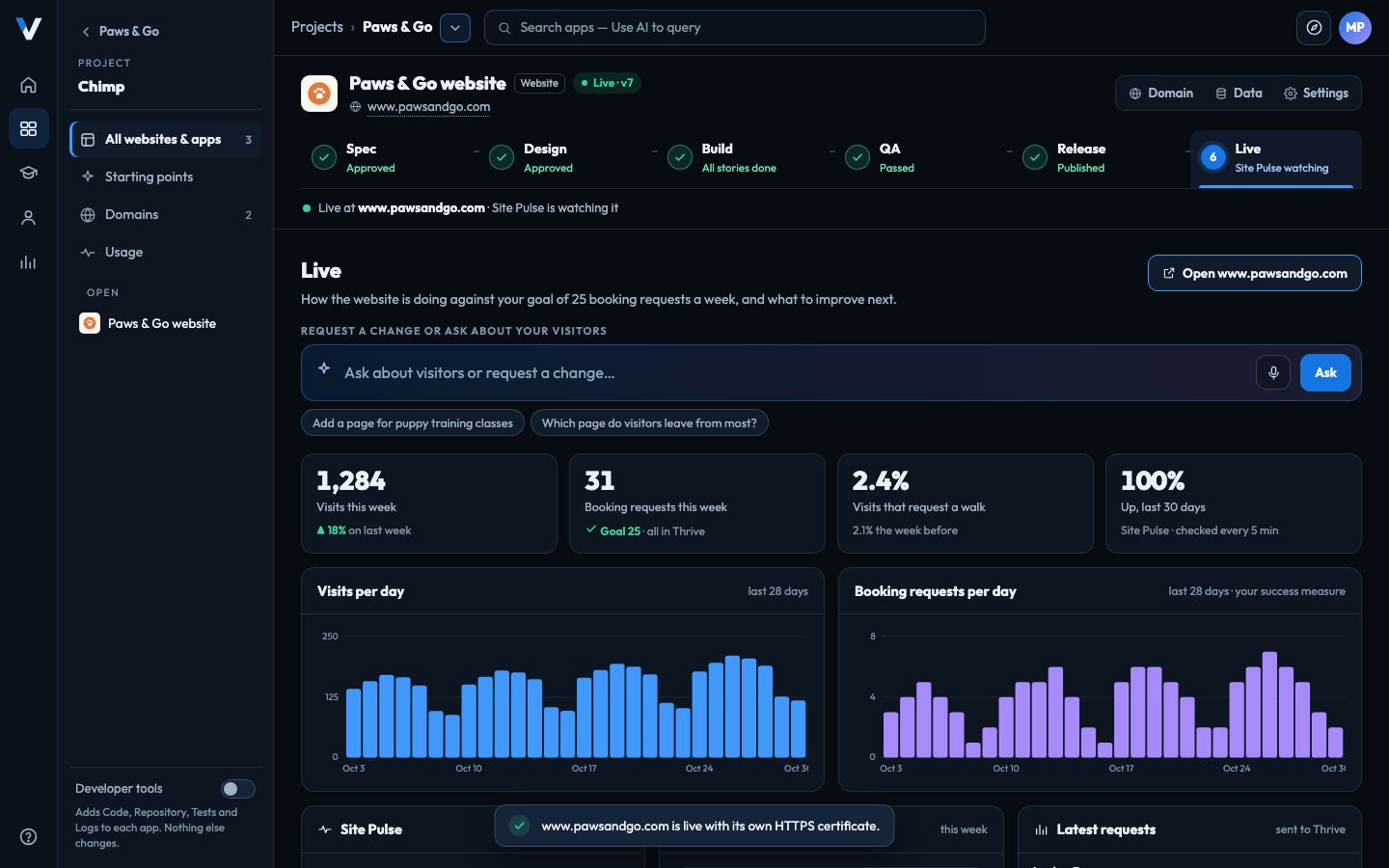
Site Pulse watches it from the first minute. See visits and conversions against the goal in your spec, and ask for the next change in plain words. It goes round the same loop, smaller.

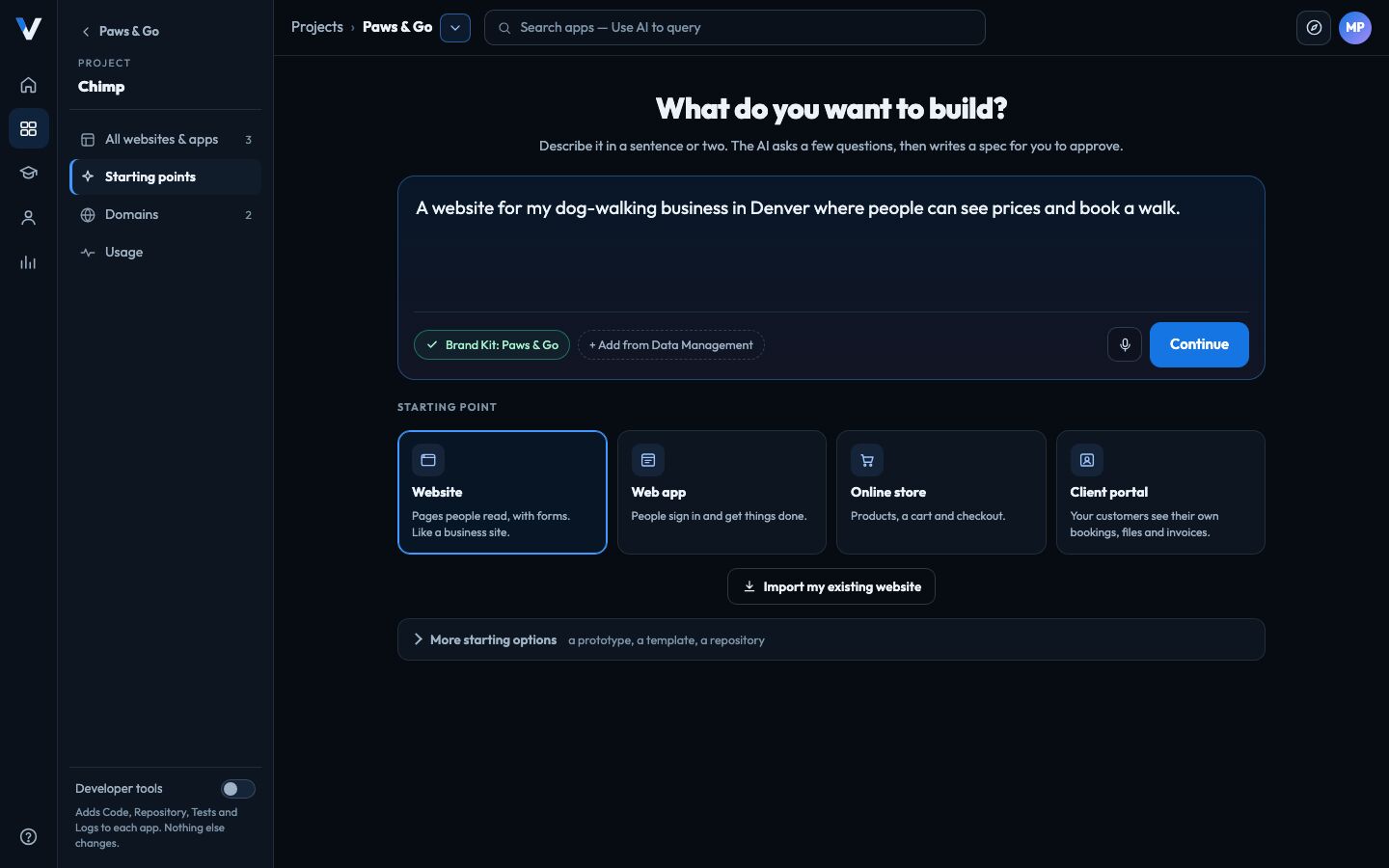
Type or say what you want: “a website for my dog-walking business where people can see our prices and book a walk.” Choose a starting point, and Chimp uses your Brand Kit so it looks like you from the first draft.

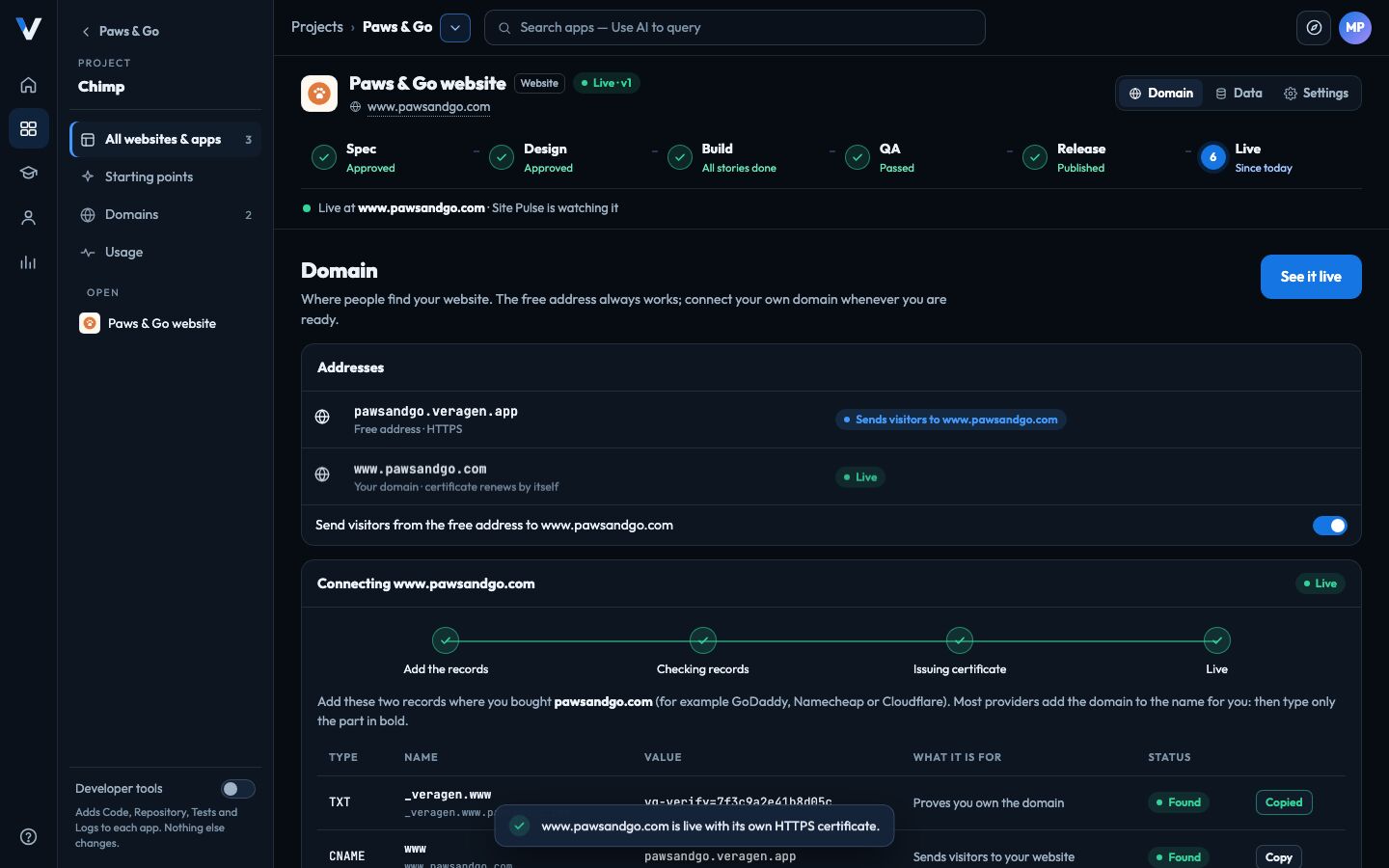
Every website goes live first at a free address. When you’re ready, type your domain and Chimp shows the two records to add where you bought it, with a Copy button and a line saying what each is for. It checks them, and the certificate renews itself.

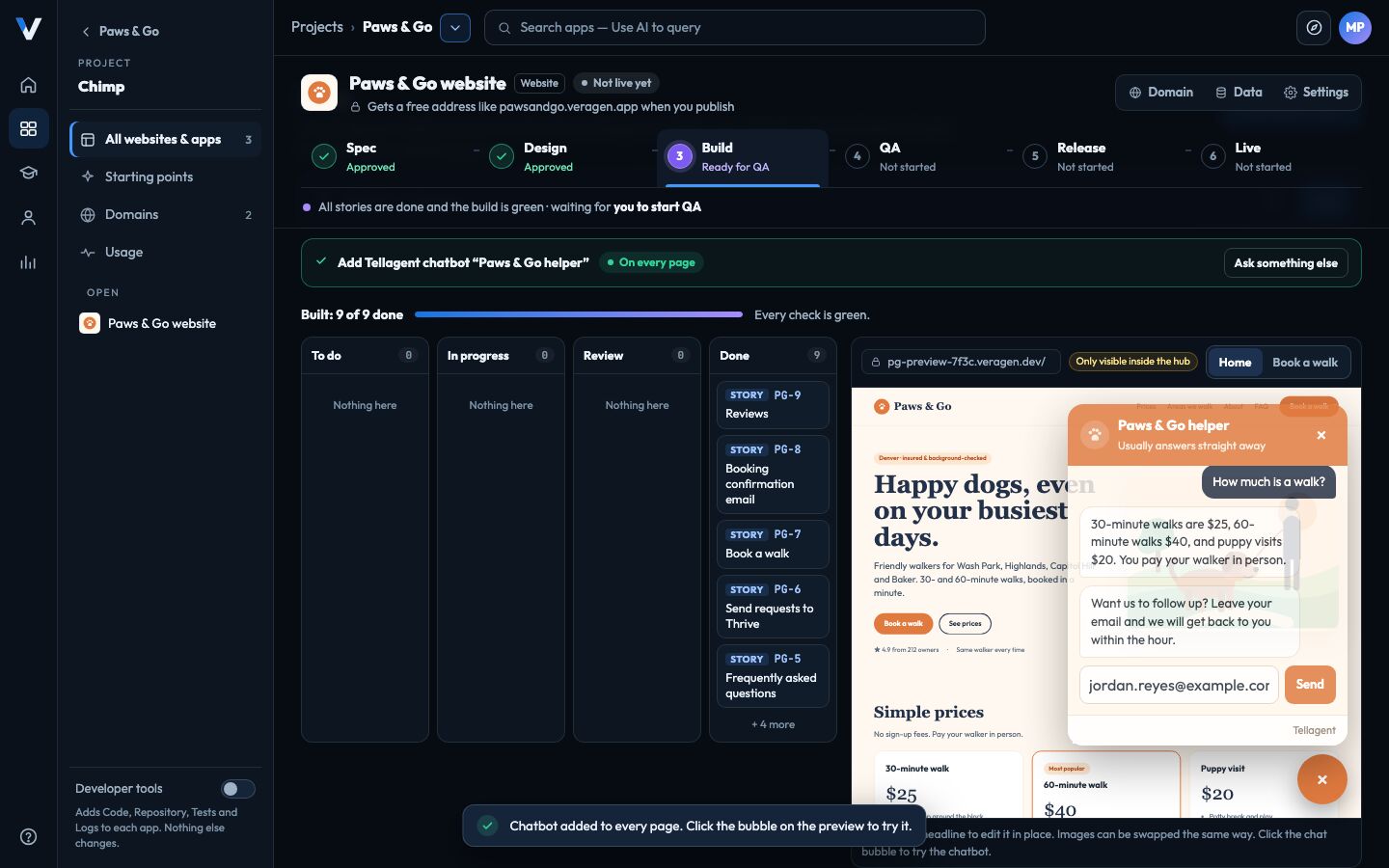
Should visitors be able to chat with you? Pick one of your Tellagent chatbots in the spec, or ask for it any time, and Chimp adds it to every page and checks that it answers.

Every piece of AI work is a task in Skunk Works, and Chimp keeps the website’s documentation in Data Management: what it is, how it works, every decision and every release. Ask Odin “why did we change the form?” and it answers from that record.
Most people never need to look under the hood. When someone does, the Developer tools switch adds the code, the repository, the tests and the logs to every app, without changing a thing for anyone else.
You
Chimp
Instead of hiring a developer or an agency, paying a website builder, and finding someone to test every change, Chimp gives you the whole team inside VeraGen. Its AI work uses your plan’s AI usage, shown as Chimp on your bill.
No. You describe what you want, answer a few questions, and approve each step. The code is there for anyone who wants it, behind the Developer tools switch.
A website with forms, a web app people sign in to, an online store, or a client portal where your customers see their own bookings, files and invoices. You can also start with a design-only prototype and build it later.
No. Prices, hours, areas and other facts come only from what you tell it and the pages you choose. When it doesn’t know one, it asks you, and the spec says “please check” until you answer.
Every acceptance criterion in your spec becomes an automated test, run on desktop, tablet and phone with accessibility, speed, search and security checks. Failures become bugs the AI engineer fixes, and nothing is released until the checklist is green. Your team can test a private staging copy too.
Yes. Every website starts on a free address such as yourbusiness.veragen.app, and you can connect your own domain by adding two records where you bought it. HTTPS is set up and renewed for you.
You do. The content and the code are yours, kept in a repository: VeraGen’s by default, or your own GitHub or GitLab. You can move it between them at any time.
That’s what Mercato is for: products, services and bookings, orders, and invoices your customers pay on your own website.
Everyone who can open the project can see its websites and apps, and everyone but viewers can start one and ask for changes. Publishers, admins and owners approve the spec and the design; admins and owners approve releases, and can narrow that further.
Chimp is new and arrives in stages, starting with the spec. Your account shows each step as it opens, and a step that isn’t open yet says so rather than pretending. AI work is never charged for a step that isn’t running.
Works together
Every app shares your files, your brand and your customers, and Odin works across all of them.
One account, every app, and $5 of AI usage to start. Set up in minutes; cancel any time before the trial ends and you pay nothing.